Distilled Water for Car Batteries & Workshops: Why 'Air Suling' Matters
Every mechanic in Malaysia knows the phrase air suling — and every battery manufacturer agrees: only distilled water goes into a lead-acid battery. Here's the chemistry behind the rule, what tap water actually does to plates and radiators, and the point at which a workshop should stop buying bottles and start producing its own.
Why do lead-acid batteries need distilled water?
Because the battery is an electrochemical instrument, not a bucket. During charging, water in the electrolyte splits and escapes as gas; the sulphuric acid stays. Topping up replaces only the water — and if that water carries minerals, three things happen:
- Plate contamination — iron and chlorides deposit on the lead plates, creating internal self-discharge paths. The battery drains itself standing still.
- Capacity loss — mineral coatings block the active plate surface, permanently cutting amp-hour capacity.
- Grid corrosion — chlorides in particular attack the lead grid structure.
Distilled water adds nothing but H₂O. That's the whole game.
What else in a workshop needs distilled water?
| Use | Why distilled | Typical volume |
|---|---|---|
| Battery top-up & new battery filling | Electrolyte purity — see above | 0.5–2 L per battery |
| Coolant premix (50/50) | Prevents radiator core & water pump scale | 2–4 L per flush |
| Windscreen washer premix | No white residue on glass | 1–2 L per top-up |
| Steam cleaners / detailing | Spot-free finish, no nozzle scale | Varies |
Buy bottles or make your own? The workshop maths
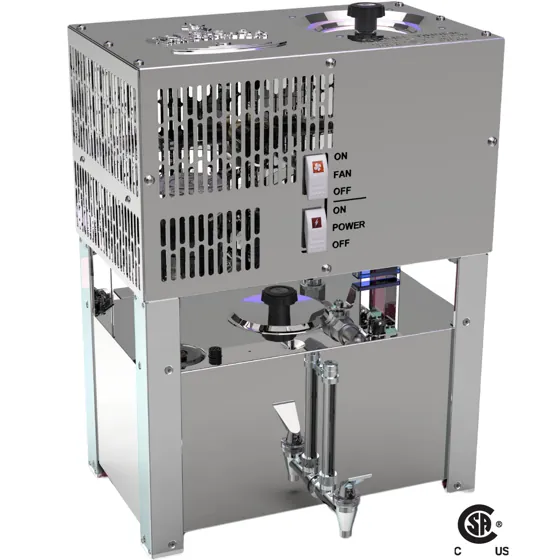
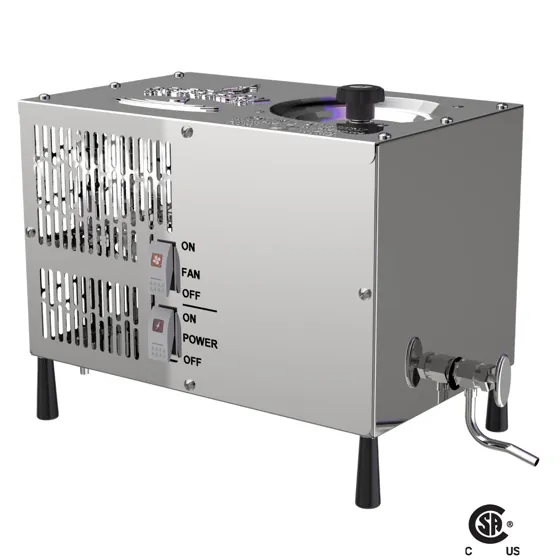
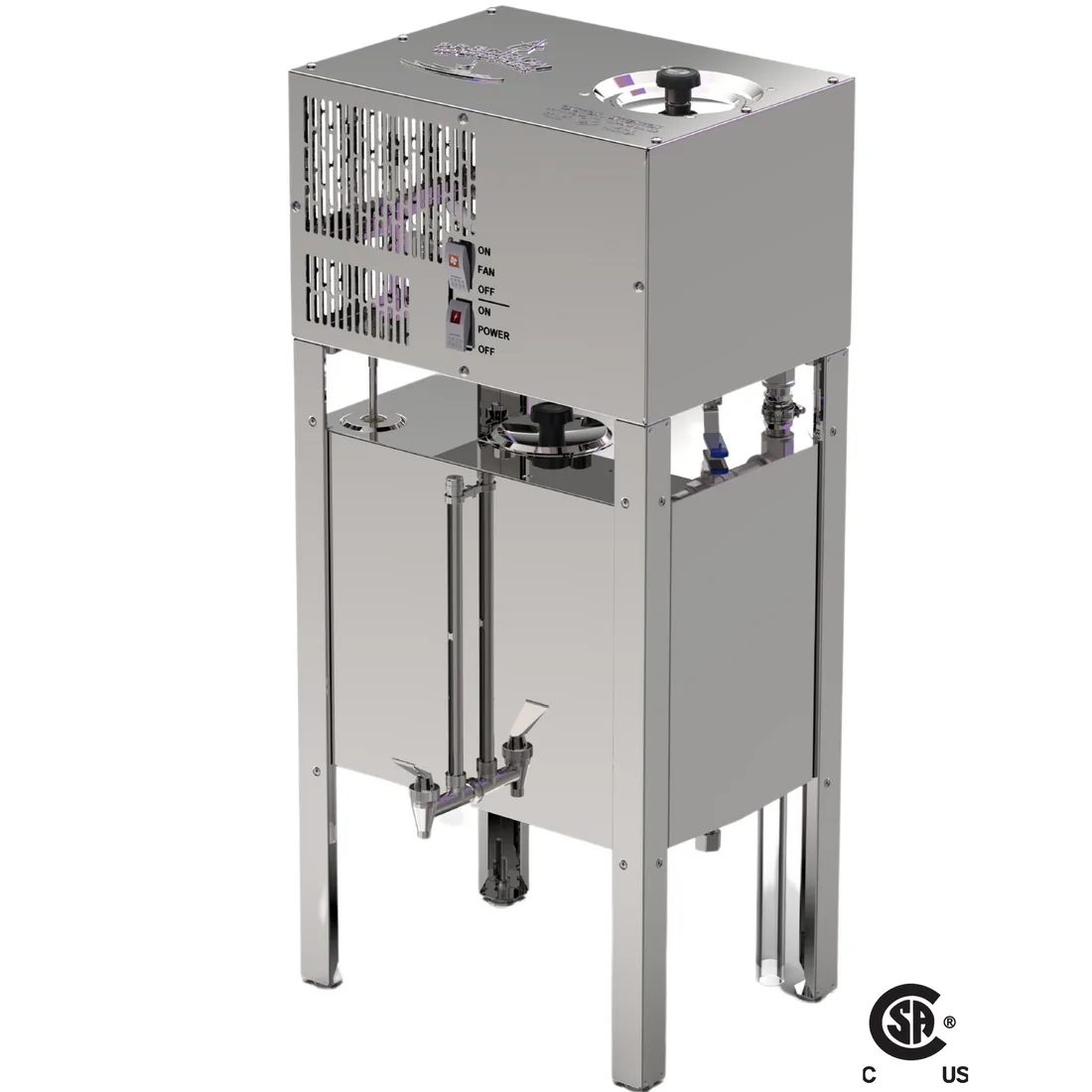
It's purely a volume question. A workshop using 20 litres a week at retail air suling prices (commonly RM2–RM4 per litre in small bottles) spends RM2,000–RM4,000+ a year on water. A distiller like the PWS 12-12 Gulf (45 L/day) or the commercial PWS 45-75 (about 170 L/day) produces the same water for roughly the cost of electricity, on-site, with no supply runs. Higher-volume operations recover the purchase cost within the first year or two; after that the water is essentially free.
Battery shops that sell distilled water alongside batteries can go further — pair a distiller with our bottle fillers and self-serve water centers and turn a cost line into a revenue line.
How do you verify battery-grade purity?
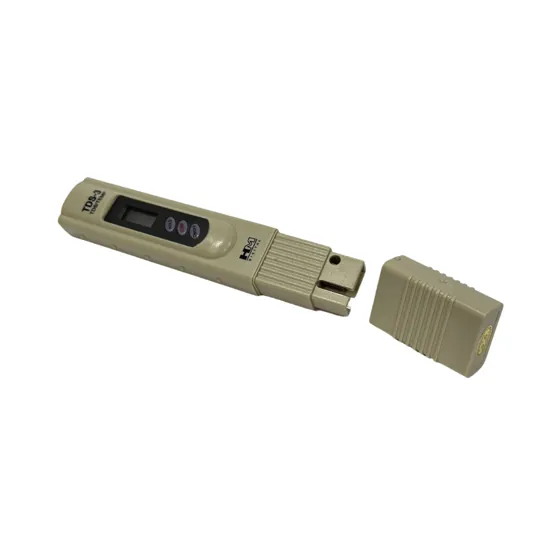
With a RM30 TDS meter, in five seconds. Dip it in the water and compare with your tap water, which in the Klang Valley commonly reads 50–150 ppm — visibly unfit for a battery. For distillation itself, the manufacturer's manuals state: “Removal efficiencies of 99% or greater were achieved for almost every chemical tested.” We keep TDS meters in stock; our guide to testing water purity explains all the numbers.
Run a workshop or battery shop?
Tell us your weekly distilled water usage — we'll size a system and show you the payback period.
Chat on WhatsAppFrequently asked questions
Can I top up a car battery with tap water?
No. Tap water contains minerals and chlorides that contaminate the electrolyte, coat the lead plates, accelerate self-discharge and permanently reduce battery capacity. Only distilled or deionized water should ever go into a lead-acid battery.
What is air suling?
Air suling is the Malay term for distilled water — water boiled into steam and condensed back to liquid, leaving all minerals behind. It is sold in bottles at petrol stations and accessory shops across Malaysia, and it's what batteries, radiators and steam equipment are designed for.
How much distilled water does a workshop use?
A busy car workshop servicing batteries, preparing coolant premix and topping radiators can easily use 20–100 litres a week. At retail bottle prices this is a real recurring cost — which is why higher-volume workshops produce their own with a distiller.
Is distilled water also used for radiator coolant?
Yes. Coolant concentrate is designed to be diluted 50/50 with distilled water. Diluting with tap water introduces minerals that scale the radiator core and water pump, reducing cooling efficiency over time.