How a Water Distiller Works, Step by Step
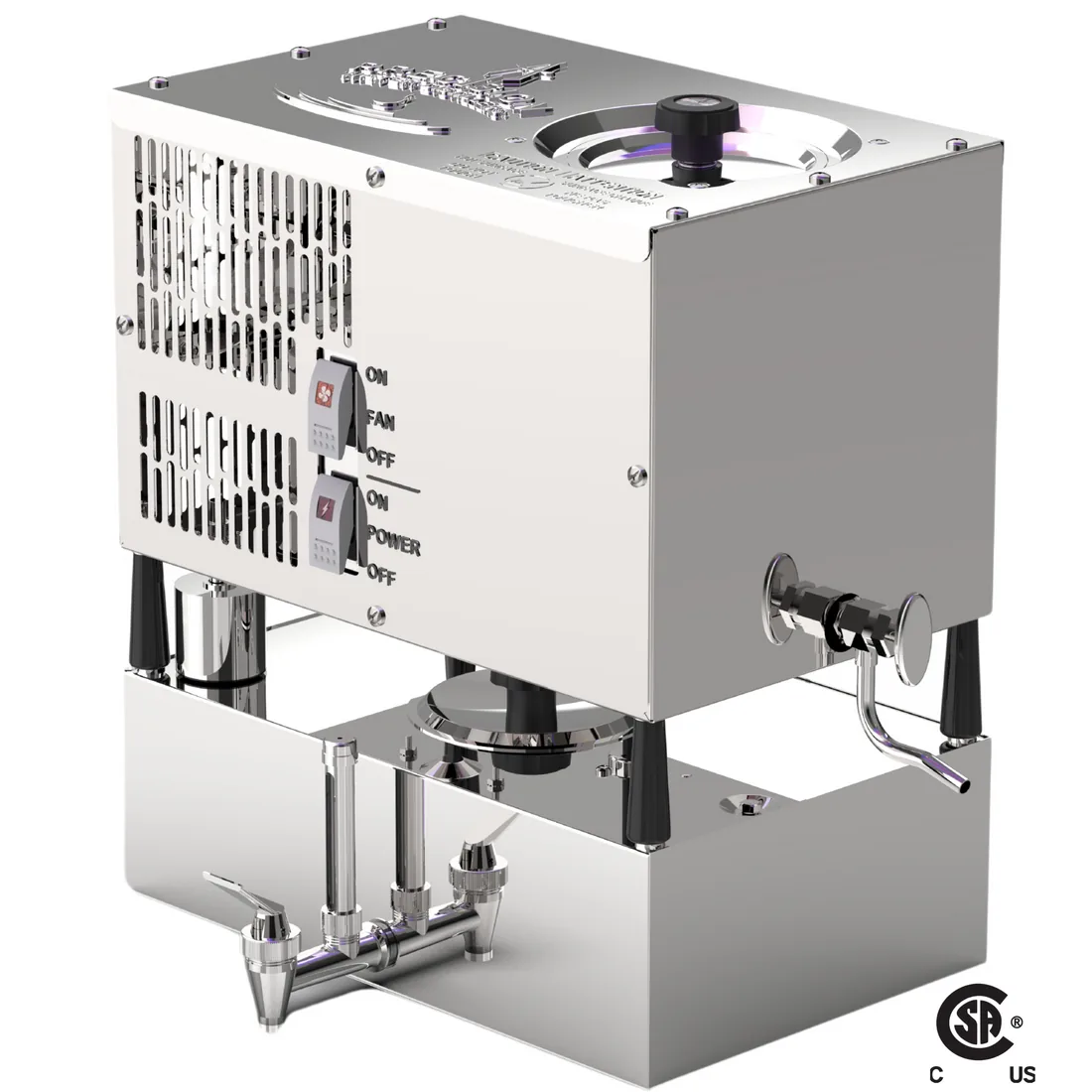
A water distiller boils tap water, lets the steam leave the dissolved minerals and salts behind, cools that steam back into liquid in a stainless-steel coil, and runs it through activated charcoal before it reaches your jug. It's the same principle as rain: water evaporates, the solids stay put. Below is each stage in order, what it removes, and the honest limits.
Stage 1: why start by boiling?
Tap water goes into a stainless-steel boiling tank with a heating element underneath. At about 100°C the water turns to steam. Minerals such as calcium and magnesium, salts and heavy metals can't evaporate at that temperature, so they stay in the tank as scale and residue. This is the step that does most of the purifying, and it's also why the tank needs regular descaling: everything removed from your water collects there.
Boiling also kills bacteria and other microbes. That's a side benefit, not the main point: a kettle does the same, but a kettle keeps all the minerals in the water.
Stage 2: what happens to the steam?
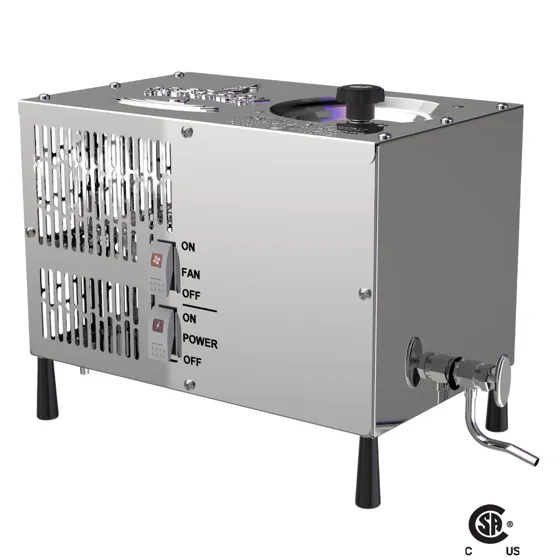
The steam rises into a stainless-steel dome and is pushed into a coiled condenser. A fan blows room air across the coil, the steam loses heat, and it turns back into liquid water.
The material of that steam path matters. Hot steam is aggressive, so the dome and coil should be stainless steel. Our glass vs plastic guide covers why plastic or aluminium in the steam path is a poor idea.
The coil also needs a little care between runs. The US Centers for Disease Control and Prevention (CDC) notes that although distillation removes bacteria from water, bacteria can grow on a unit's cooling coils while it sits unused. If a distiller has been idle for a while, we recommend rinsing it and discarding the first batch.
Stage 3: why is there charcoal at the end?
Condensed water drips through a sachet of activated coconut charcoal before collection. Charcoal catches volatile organic compounds that can travel with steam, and it improves taste. A spent sachet is the usual reason distilled water starts to taste off, so it's changed roughly monthly.
What does distillation remove, and what can slip through?
Separation by boiling works on anything that can't turn to steam at around 100°C. According to the CDC's overview of home water treatment, distillation removes parasites, bacteria and viruses, plus many chemicals, including arsenic, barium, cadmium, chromium, lead, nitrate, sodium, sulfate, calcium, magnesium and many organic (carbon-containing) chemicals.
The same source is clear about the gap: distillation does not remove some volatile organic compounds (VOCs), volatile solvents and certain pesticides. These compounds evaporate easily, so some rise with the steam and condense back into the water. Boiling alone can't separate them.
That gap is the reason the charcoal stage exists. Activated charcoal adsorbs many organic compounds onto its surface, so it helps reduce what travelled with the steam before the water reaches your container. It's also why the sachet has to be changed on schedule: once its surface is used up, it stops doing that job and the water's taste is usually the first sign.
Is boiled water the same as distilled water?
No, and this is the most common mix-up. When you boil water in a kettle, the steam escapes into the room and the water left behind is what you pour. Everything dissolved in the tap water stays in the kettle. As water boils off, the minerals actually become slightly more concentrated.
A distiller does the opposite: it keeps the steam and leaves the boiled water behind. The table below sets out the difference.
| Boiled water (kettle) | Distilled water | |
|---|---|---|
| What you drink | The water left after boiling | Condensed steam |
| Microbes | Killed by boiling | Killed and left behind |
| Minerals, salts, heavy metals | Stay in the water | Stay in the boiling tank |
| Scale in appliances | Same as tap water | Very little dissolved content left to form scale |
| Dissolved solids | Same as your tap water | Left behind in the boiling tank |
This is why boiled tap water is no substitute in a CPAP humidifier, a steam iron or an autoclave: boiling kills germs, but the minerals that cause scale are still there. Our CPAP guide and autoclave guide explain what that scale does to the equipment.
How does each stage compare?
| Stage | Main job | What it handles | Your upkeep |
|---|---|---|---|
| Boiling tank | Separation | Minerals, salts, heavy metals, microbes | Rinse; descale periodically |
| Dome and coil | Condensing | Turns steam back to water | Keep fan clear of dust |
| Charcoal sachet | Polishing | Volatile organics, taste | Replace about monthly |
| Collection / reserve | Storage | Holds finished water | Clean container regularly |
Manual and automatic distillers: what changes inside?
The physics is identical. The difference is plumbing and control:
- Manual fill, like the PWS 8-M Stream: you pour water into the tank and switch it on; it stops when the batch is done. No installation.
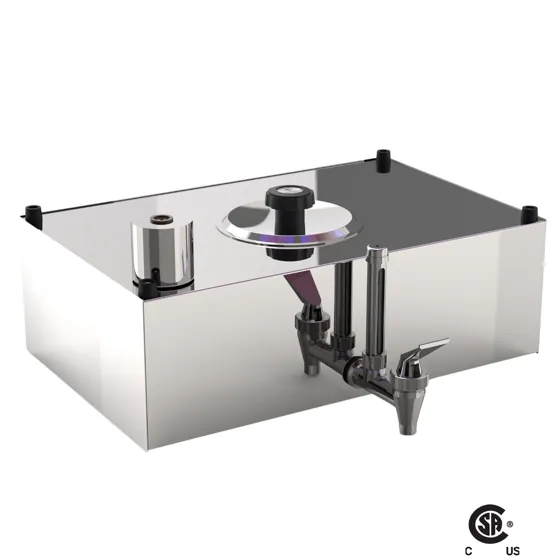
- Automatic, like the 8-5 River or 12-20 Sea: connected to your water line, it refills the boiling tank itself and keeps a reserve tank topped up, so you draw water like from a dispenser.
Our buyer's guide sets out which suits which household or clinic.
Why is distillation so slow?
Because you are boiling every litre. A countertop unit produces about 1.2–1.9 litres an hour. That pace is the trade-off for a method that doesn't rely on a membrane or cartridge wearing out. An RO membrane's performance degrades as it ages; a distiller has no membrane to replace, though the tank must be kept descaled to keep working well. Our distilled vs RO comparison goes through the pros and cons both ways.
What does it cost to run?
Electricity is the main running cost: roughly 3.5 kWh per 4 litres. At Malaysian household tariffs that's about RM0.23–0.30 per litre, plus a small amount for charcoal and descaler. The Malaysia cost breakdown and the Singapore buying guide compare that with bottled water.
What can't a distiller do?
- It doesn't make ultrapure lab water. Distilled output is Grade 3 / Type III, fine for drinking, CPAP, autoclave feed and glassware rinsing, but not for methods that need Type I water.
- It isn't instant. Without a reserve tank you wait for each batch.
- It removes minerals on purpose. If you want minerals in your drinking water, you get them from food; our safety guide covers this.
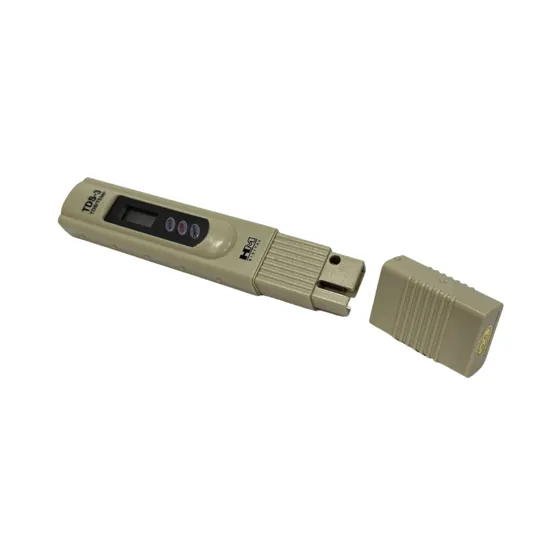
You can check any distiller's output yourself with a TDS meter by comparing it with your tap water. The manufacturer's manuals state: “Removal efficiencies of 99% or greater were achieved for almost every chemical tested.” All our units run on 220–240V with local plugs for Malaysia and Singapore. See the home distiller range.
Questions about how a specific model works?
Send us the model name or a photo of your current unit. We'll explain the setup, upkeep and the current price on WhatsApp.
Ask on WhatsAppFrequently asked questions
How does a water distiller purify water?
It boils tap water into steam, leaving dissolved minerals, salts and most other contaminants behind in the boiling tank. The steam is cooled in a stainless-steel coil until it condenses back into liquid, then passes through an activated charcoal sachet before collection.
How long does a water distiller take to make water?
A countertop distiller produces roughly 1.2–1.9 litres per hour, so a 4-litre batch takes a few hours. Automatic models run continuously into a reserve tank, so water is ready when you need it.
Does distillation remove everything?
It removes dissolved minerals, salts and heavy metals very effectively. The manufacturer's manuals state: “Removal efficiencies of 99% or greater were achieved for almost every chemical tested.” Some volatile compounds can travel with the steam, which is why the charcoal stage after the coil matters. The result is Grade 3 / Type III water, not Type I ultrapure lab water.
How much electricity does a water distiller use?
Roughly 3.5 kWh for every 4 litres. In Malaysia that works out to about RM0.23–0.30 per litre at household tariffs; see our cost breakdowns for the full sums.