Distilled Water for Autoclaves & Dental Clinics: Requirements, Costs and the In-House Option
One lab autoclave manual (Tuttnauer LABSCI series) states: "USE DISTILLED WATER ONLY. The impurities in tap water will create the need for more frequent cleaning and maintenance". It also warns that feed water above its conductivity limit "may cause failures." For clinics in Malaysia and Singapore buying bottled distilled water week after week, there is a quieter option: produce it in-house. Here's the full picture for practice owners.
Why exactly do autoclaves need distilled water?
Because steam concentrates whatever is dissolved in the feed water. Tap water at 100–200 ppm TDS leaves its minerals behind as scale on the chamber walls, heating element, solenoid valves and level sensors every single cycle. The visible symptoms arrive in order: white spotting on instruments, longer cycle times, error codes from crusted sensors, then a service call — and service technicians can tell immediately when a machine has been fed tap water.
What water do dental unit water lines need?
Dental chair water lines have the same enemy — scale and biofilm. Deionized or distilled feed water keeps lines clean and keeps you aligned with infection-control guidance. Many clinics run a dedicated system such as the DI75 dental water filtration system for chair lines, alongside distilled water for the autoclave.
What does buying distilled water actually cost a clinic?
More than most owners realise, because it's paid in small weekly amounts. A single-chair practice using 3 litres a day, six days a week, consumes roughly 75 litres a month. At bulk bottled rates that is commonly RM150–RM400+ per month, forever — plus the operational annoyances: storage space for bottles, delivery dependencies, and the Friday afternoon discovery that stock ran out before a full sterilisation day.
| Bottled distilled water | In-house distiller | |
|---|---|---|
| Monthly cost (single chair) | RM150–RM400+ | ≈RM30–RM60 electricity + consumables |
| Supply risk | Delivery schedules, stockouts | None — produced overnight on-site |
| Storage | Cartons of bottles | Built-in reserve tank |
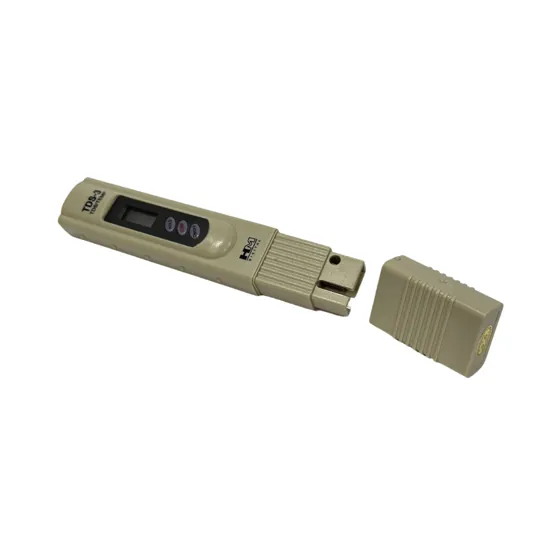
| Purity assurance | Depends on supplier handling | Verifiable yourself with a TDS meter |
Which distiller fits which clinic size?
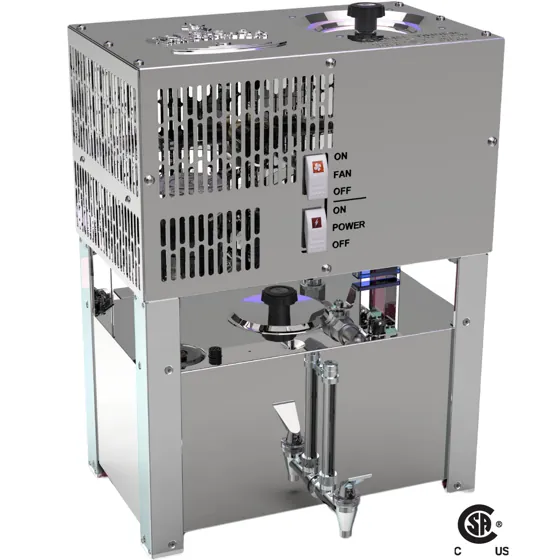
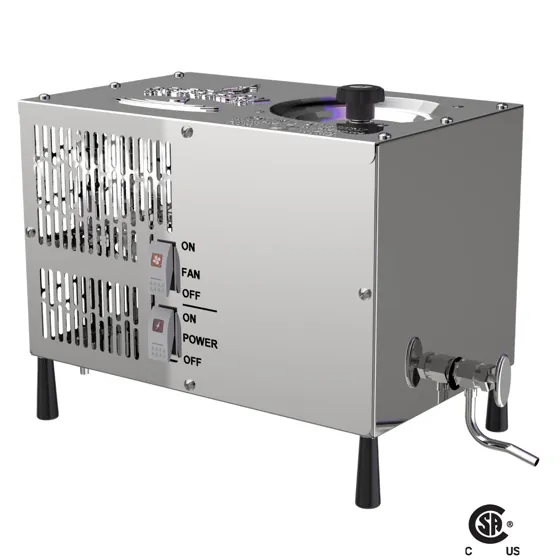
- Single-chair dental or GP clinic — the PWS 12-12 Gulf (12 US gal/day, about 45 L) or PWS 12-20 Sea (12 US gal/day, about 45 L, into a 76 L reserve) produces a full week's water overnight with huge headroom.
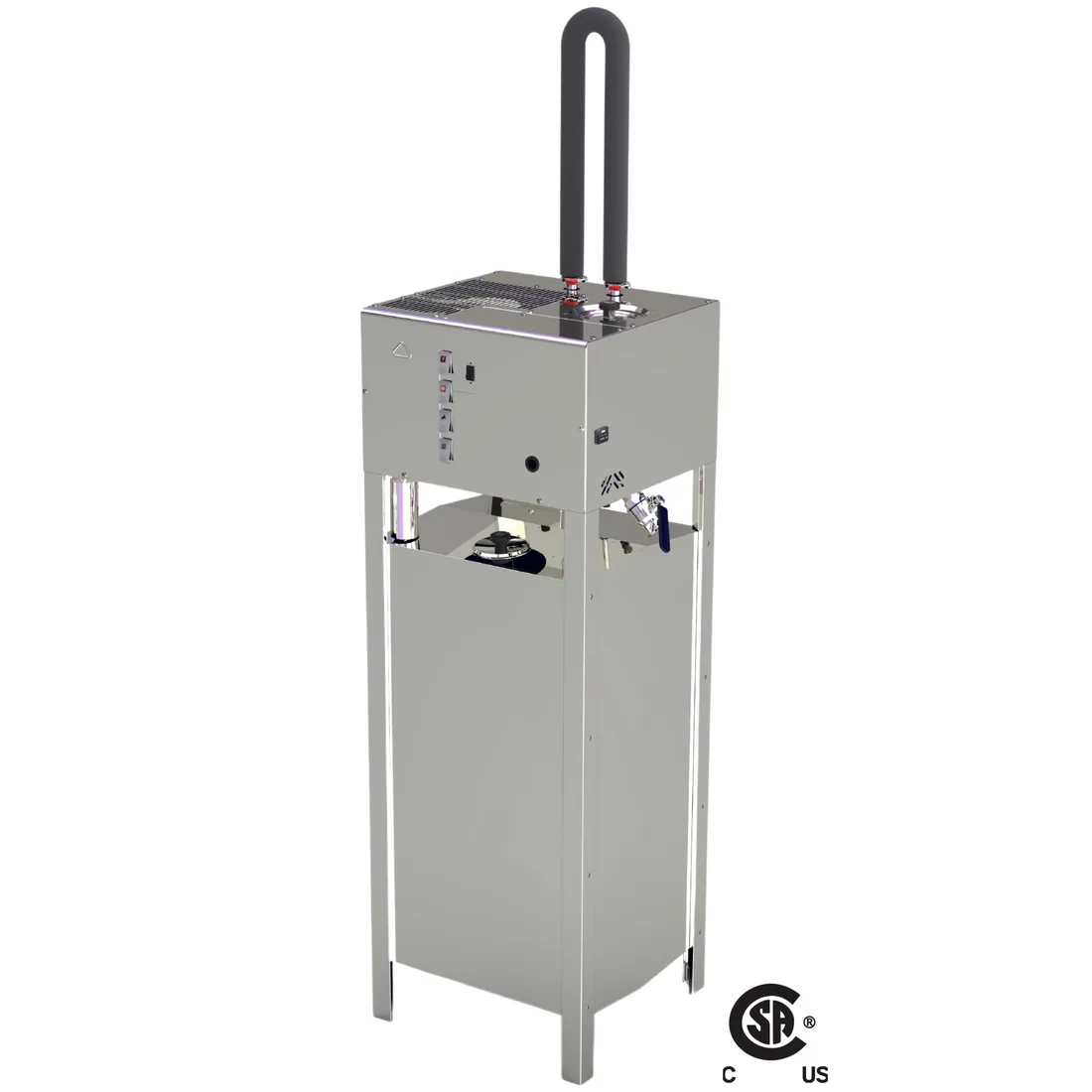
- Multi-chair clinics, labs and hospitals — the PWS 45-75 commercial distiller delivers about 170 litres per day into a 284-litre holding tank.
- Bottling or water businesses — pair a commercial distiller with our bottle washers, fillers and self-serve centers for a complete production line.
What grade of water will you get? A distiller produces water we describe as lab Grade 3 / Type III at best: suitable as autoclave feed water and for general rinsing, not for ultrapure lab work. Always check your autoclave manual's own water specification. If your chair lines need deionised water on tap, the DI75 RO/DI system can be used alongside a distiller such as the 12-20 Sea, and the rest of our clinic and lab equipment is on the commercial distillers and equipment page.
Running a clinic?
Send us your autoclave model, chair count and roughly how many cycles you run a day. We'll suggest a model and reply with the current price.
WhatsApp us about your clinicAll units are stainless steel, supplied in the correct voltage for Malaysia and Singapore, with the full genuine parts catalogue stocked locally — heating elements, gaskets, switches and filters — so a clinic is never waiting on overseas shipping for a wear item.
What maintenance does an in-house distiller need?
Minutes per week. Rinse the boiling tank, run PWS Descaler periodically to dissolve accumulated scale (the distiller concentrates the minerals so your autoclave never sees them), and change the activated charcoal sachet monthly. Staff can do it; no technician required.
Get a clinic quotation
Tell us your chair count and daily sterilisation load — we'll size the right system and send a quotation. WhatsApp us about delivery to your area.
Chat on WhatsAppFrequently asked questions
Why do autoclaves require distilled water?
Dissolved minerals in tap water form scale on the chamber, heating elements and valves. One lab autoclave manual (Tuttnauer LABSCI series) states: "USE DISTILLED WATER ONLY. The impurities in tap water will create the need for more frequent cleaning and maintenance".
Can I use RO water in an autoclave?
Only if it consistently meets the manufacturer's conductivity spec — and household RO output rises with membrane age, so it often doesn't.
How much distilled water does a dental clinic use?
A typical single-chair practice uses 2–5 litres a day across the autoclave and dental unit water lines; multi-chair clinics use proportionally more. At bulk bottled prices this commonly reaches RM150–RM400+ per month — which is why in-house distillation pays back quickly.