Distilled Water for CPAP Machines in Malaysia & Singapore: The Complete Guide
Every CPAP manufacturer tells you the same thing: use distilled water in the humidifier. For nightly users in Malaysia and Singapore that means hauling 10–15 litres of bottled distilled water home every month, forever. This guide covers why the requirement exists, what it really costs, and the point at which making your own water at home becomes the obviously cheaper option.
Why do CPAP manufacturers insist on distilled water?
Because the humidifier chamber is a nightly boiling pot. Heated humidification evaporates water all night; whatever minerals are dissolved in that water stay behind as white scale on the chamber walls. Scale clouds the chamber, gives bacteria a surface to grow on, and eventually damages the heating plate. Distilled water is pure H₂O — nothing to deposit, nothing to feed microbes. That's the entire reason, and it's why the requirement appears in ResMed and Philips user manuals rather than being marketing.
What does bottled distilled water for CPAP cost in Malaysia and Singapore?
More than most CPAP users have ever added up. The arithmetic for a typical nightly user:
| Malaysia | Singapore | |
|---|---|---|
| Nightly use | 300–500 ml | 300–500 ml |
| Monthly volume | 10–15 L | 10–15 L |
| Typical bottled price | ≈RM2–RM4 / litre | ≈S$0.70–S$2 / litre |
| Yearly spend | RM250–RM700 | S$85–S$360 |
| 10-year spend | RM2,500–RM7,000 | S$850–S$3,600 |
Add the non-money costs: carrying bottles home weekly, running out on a Sunday night, and storing plastic bottles in a hot flat. Full per-litre calculations are in our distilled water cost breakdown.
What's the alternative — and when does it win?
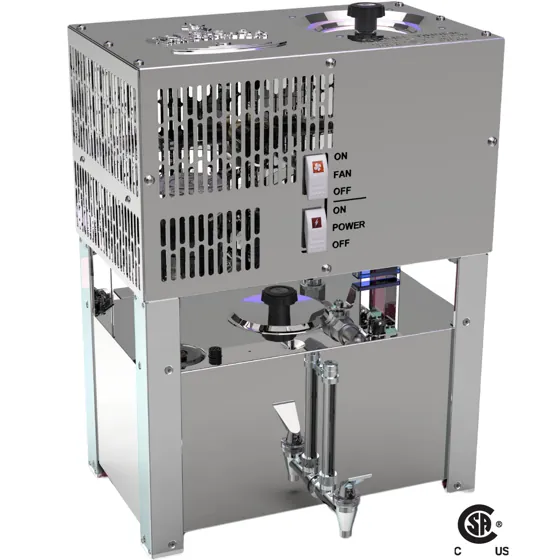
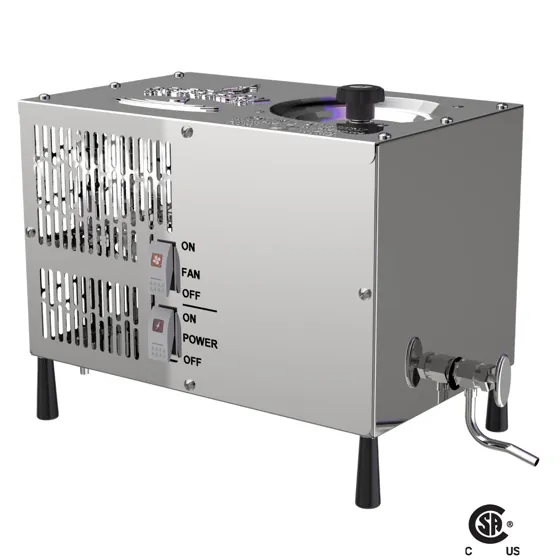
A manual countertop distiller ends the entire cycle. The PWS 8-M Stream needs no plumbing: fill it, switch it on, and collect pure distilled water — up to 30 litres a day if you ever needed that much. One evening batch covers a week of CPAP use. Electricity works out to roughly RM0.90–RM1.20 per 4-litre batch in Malaysia (≈S$0.95–S$1.40 in Singapore), which is a fraction of any bottled price.
For a nightly CPAP user spending RM40/month on bottles, the distiller typically pays for itself within the first one to two years — and stainless-steel PWS units routinely run 10–20 years with basic maintenance and genuine spare parts, which we stock locally in KL and Singapore.
CPAP water hygiene: three habits that matter
- Empty the chamber every morning — don't let yesterday's water sit all day.
- Weekly wash — warm soapy water for the chamber, thorough rinse (with distilled water if your tap water is hard).
- Store your distilled water in clean, closed containers — glass or food-grade HDPE, out of sunlight.
Which distiller should a CPAP user choose?
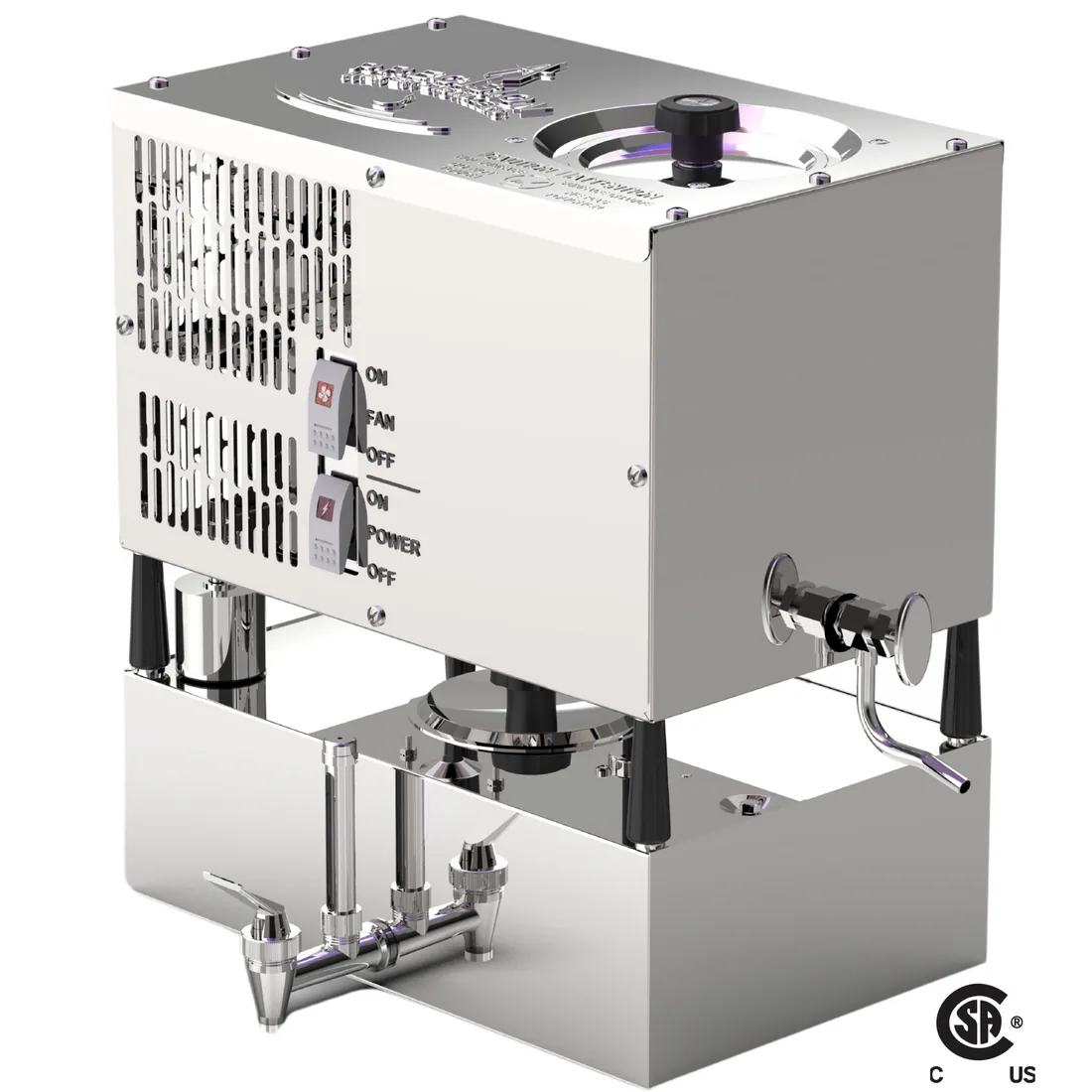
The manual 8-M Stream is the CPAP sweet spot — smallest footprint, no installation, and vastly more capacity than CPAP alone needs (your drinking water, steam iron and humidifier are covered too). If your household also wants distilled drinking water on tap, step up to the automatic PWS 8-5 River with its 19-litre built-in reserve. Compare the full home range here.
CPAP user? Get your numbers.
Tell us how much bottled distilled water you buy monthly — we'll reply with the exact payback maths and current pricing.
Chat on WhatsAppFrequently asked questions
Why do CPAP machines need distilled water?
CPAP humidifier chambers heat water every night. Tap or mineral water leaves mineral scale that clouds the chamber, breeds bacteria and shortens the humidifier's life. Distilled water contains no minerals, so the chamber stays clean and the mist you breathe is pure. Every major CPAP manufacturer, including ResMed and Philips, specifies distilled water.
How much distilled water does a CPAP machine use?
A typical heated humidifier uses 300–500 ml per night, roughly 10–15 litres per month. At Malaysian or Singaporean retail prices for bottled distilled water, that is commonly RM25–RM60 (or S$10–S$30) every month, indefinitely.
Can I use boiled tap water in a CPAP machine?
No. Boiling kills microbes but removes no minerals — the scale problem remains exactly the same. Only distillation (or deionization) removes the dissolved solids that damage humidifier chambers.
Is it cheaper to make my own distilled water for CPAP?
For nightly CPAP users, yes. A countertop distiller produces water for roughly the cost of electricity — around RM0.90–RM1.20 per 4-litre batch in Malaysia — and typically pays for itself within the first one to two years versus buying bottles, then keeps producing for a decade or more.